The Best Ways to Bring More Natural Light Into Your Extension
The single most effective thing you can do to maximise natural light in an extension is get the orientation right at the design stage. Everything else, the glazing choices, the roof lanterns, the internal finishes, all work better when the extension is positioned to make the most of the available daylight for your site.
Does Orientation Affect How Much Light an Extension Gets?
Yes, significantly. South-facing extensions receive sunlight throughout the day, making them ideal for open-plan kitchen and living spaces. They may need solar control glazing to prevent overheating in summer. North-facing extensions get softer, more consistent indirect light. They benefit from larger glazing areas to compensate for reduced direct sun. East-facing rooms get morning sun, which suits kitchens and breakfast areas. West-facing rooms get afternoon and evening light, which works well for dining and living spaces.
Understanding your property’s orientation before finalising the design allows you to place large openings where they will do the most work.
What Type of Glazing Brings in the Most Light?
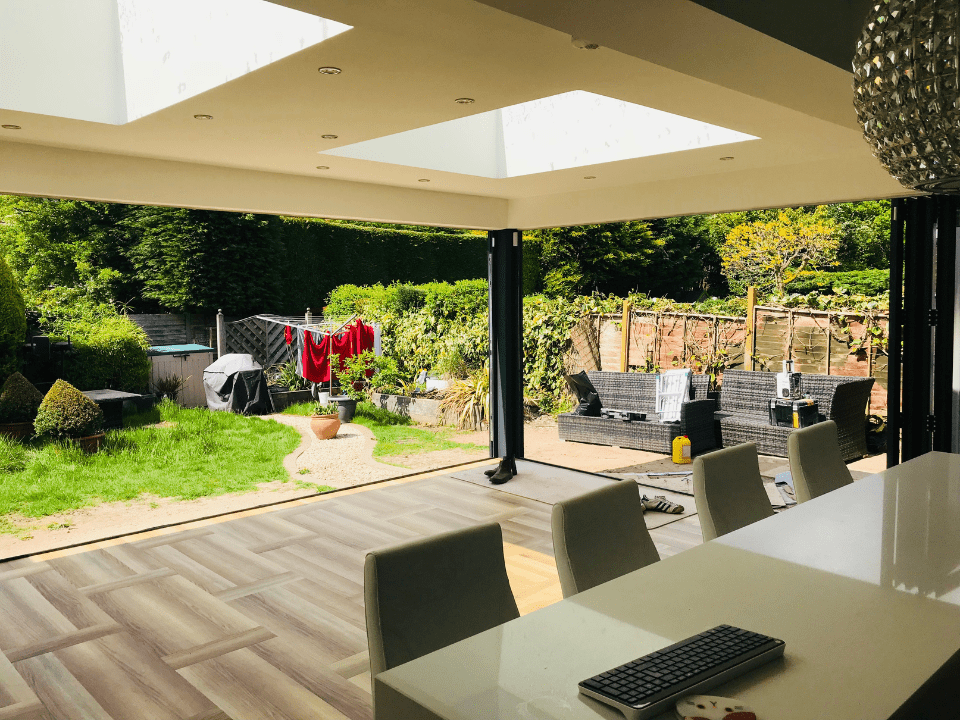
Bifolding and sliding doors are the most effective way to bring large amounts of daylight into a rear extension. A full-width set of bifolding doors across the rear elevation removes most of the solid wall that would otherwise block light. When open, they also eliminate the boundary between inside and outside, making the space feel significantly larger.
Rooflights are the next most impactful option. Positioned within a flat or pitched roof, they introduce light from directly above rather than from the sides. This is particularly valuable in deeper extensions where windows alone cannot reach the centre of the space. Fixed and opening designs are both available. Opening rooflights also provide ventilation.
Roof lanterns go further than standard rooflights. Their raised structure allows daylight to enter from multiple angles rather than just from directly above, distributing light more evenly across the extension. They also draw the eye upward, making the space feel taller and less enclosed.
How Much Glazing Is Allowed Under Building Regulations?
Under Part L of the building regulations, the total glazed area in an extension must not exceed 25% of the floor area. This includes all windows, doors, rooflights and roof lanterns combined.
Where a design needs more glazing than this, compliance can still be achieved through a compensatory calculation that accounts for the thermal performance of the glazing specified. High-performance glazing with lower U-values can offset a larger glazed area in some cases. This needs to be confirmed by whoever is preparing your building regulations drawings.
Does a Side Return Extension Help with Natural Light?
Side return extensions are particularly effective at improving light in terraced houses. The side return, the narrow strip of land alongside the rear projection of a terraced property, is often already in shadow. Infilling it and adding a rooflight or glazed roof section above the junction with the original house brings light into what was previously one of the darkest parts of the ground floor. Many terraced houses use this approach to transform a dark galley kitchen into a full-width, light-filled kitchen-diner.
What Interior Choices Help Light Travel Further?
Glazing decisions happen at the design stage but internal finishes have a meaningful effect on how light moves through the finished space.
Light-coloured wall and ceiling finishes reflect daylight further into the room rather than absorbing it. Pale floors do the same. Open-plan layouts without internal partitions allow light from glazed rear walls and rooflights to reach the original parts of the house rather than being contained in the new space.
Mirrors and reflective surfaces positioned opposite glazing bounce light further into the room. These are low-cost choices that make a noticeable difference, particularly in north-facing extensions where direct sunlight is limited.
What Is Solar Control Glazing and Do I Need It?
Solar control glazing has a coating that reduces the amount of heat entering through the glass while still allowing light through. In south-facing extensions with large glazed areas, the sun can make the space uncomfortably warm in summer without it.
Electrochromic glass, which tints automatically in response to sunlight intensity, is also available and becoming more accessible for residential projects. Both options allow you to maximise glazing without the space overheating. Your glazing supplier can advise on the appropriate specification for the orientation and glazed area involved.
Frequently Asked Questions
How much of my extension can be glazed under building regulations?
Up to 25% of the floor area as a standard allowance. Higher percentages are possible where the thermal performance of the glazing specified compensates for the larger area, confirmed through a building regulations calculation.
Do rooflights need planning permission?
In most cases, rooflights on a rear roof slope do not require planning permission under permitted development. Rooflights on a front roof slope visible from the road may require permission. Listed buildings and properties in conservation areas have tighter restrictions.
Are bifolding or sliding doors better for natural light?
Both perform similarly for light. Bifolding doors open the full width of the aperture when folded back. Sliding doors leave one panel in place but have a cleaner sightline when closed. The choice comes down to how much of the opening you want to clear when the doors are open.
Does a north-facing extension stay dark all year?
Not if it is designed well. Larger glazing areas, rooflights, light-coloured internal finishes and open-plan layouts can make a north-facing extension feel bright and comfortable. The light is softer and more consistent than a south-facing space but not inadequate.
What is the most cost-effective way to add natural light to an extension?
Rooflights offer the best return for the cost. A well-positioned rooflight brings consistent daylight into areas a window cannot reach and adds comparatively little to the overall build cost.
Use Your Space designs and builds extensions across Solihull, Warwick, Knowle, Dorridge, Bentley Heath, Shirley, Balsall Common, Leamington Spa and Kenilworth. We consider orientation, glazing and internal layout from the outset so your extension is as bright as possible throughout the year.
Contact Use Your Space today to discuss your project.