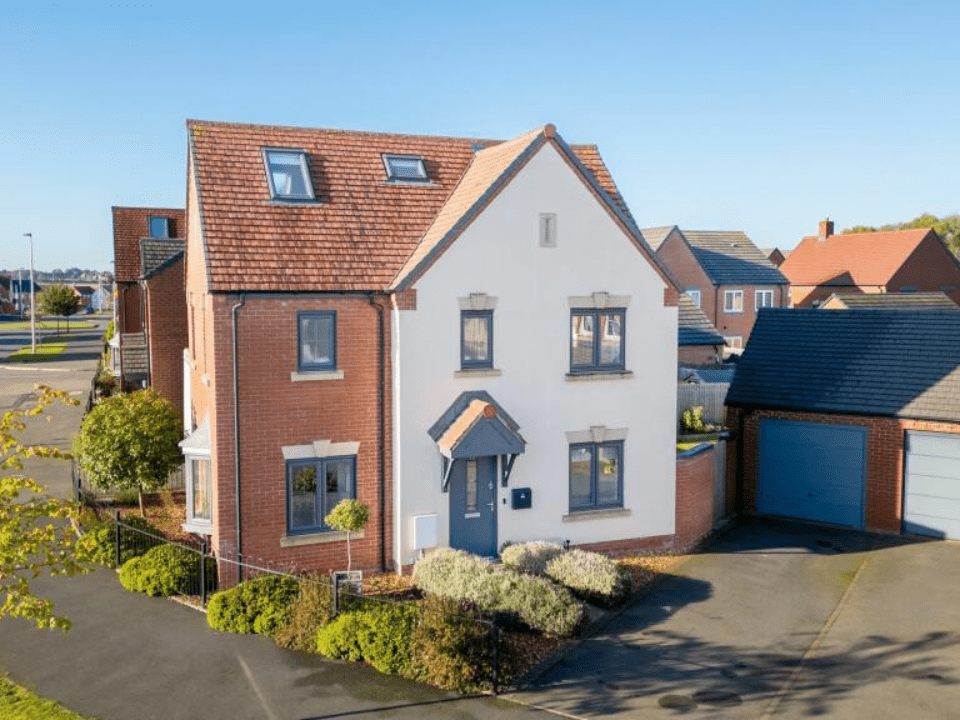
Can My Loft Be Converted? The 5 Things You Need to Check First
Based on our experience completing loft conversions and honest conversations with homeowners about what worked and what didn’t, we examine the absolute dealbreakers that make or break loft conversion projects, and how to avoid discovering expensive problems after you’ve already committed.
This comprehensive guide reveals the five critical checks that determine whether your loft can be converted in 2026.
Key topics covered:
- Head height requirements and how to measure properly
- Traditional vs trussed roof structures and cost implications
- Staircase space requirements and solutions
- Party wall procedures for semi-detached and terraced properties
- Floor loading capacity and structural strengthening costs
- What to do if your loft fails these checks
- Professional assessment options and costs
Check 1: Head Height – The Absolute Dealbreaker
UK Building Regulations require minimum 2.2 metres headroom measured from the top of ceiling joists to the underside of the ridge beam. Without this, your conversion fails building control.
This isn’t arbitrary. Once you add floor structure (100mm), insulation (100mm to 270mm), and new ceilings (50mm), you lose 250mm to 420mm of height. Starting with 2.2 metres gives you approximately 1.8 to 1.95 metres finished ceiling height. Lower than this creates cramped, unusable rooms that feel oppressive.
How to measure properly
From the top surface of existing ceiling joists straight up to the ridge beam underside. Not from your downstairs ceiling. Not to roof tiles. Joist tops to ridge beam. Measure at the highest point in the centre of your loft. If you’re getting 2.2 metres or more, your loft likely suits standard conversion. Between 2.0 and 2.2 metres needs design adjustments. Under 2.0 metres requires major structural work.
What if you’re short?
Dormer conversions add height by building out from your roof, typically costing £10,000 to £20,000 extra. Lowering ceilings below gains loft height if downstairs rooms can spare 100mm to 150mm, though this affects rooms below. Raising the entire roof works but costs £25,000 to £40,000-plus and needs planning permission. Most councils won’t approve raising ridge lines higher than attached neighbours, particularly in conservation areas.
Properties with 1.8 metres or less need major structural work. Budget accordingly or reconsider whether conversion makes financial sense.
Check 2: Roof Structure – Traditional vs Trussed
Your roof type determines conversion complexity and cost. The difference between traditional and trussed roofs adds £8,000 to £15,000 to project budgets.
Traditional cut roofs (pre-1960s)
Individual rafters and purlins create relatively open loft space. These convert easily. Strengthening involves adding floor joists and minimal additional support. Standard conversion costs apply because the roof structure already provides workable space.
Trussed roofs (post-1960s)
Prefabricated W-shaped trusses fill the loft completely. These must be removed and replaced with steel beams and alternative support structures. Add £8,000 to £15,000 to your budget for structural engineering calculations, steel beam supply and installation, and supporting framework.
Check your loft now. See clear space with individual rafters and horizontal purlins? Traditional roof. See W-shaped timber frames everywhere blocking the space? Trussed roof. Both can convert, but trussed roofs cost substantially more and require more complex structural work.
Check 3: Access and Staircase Space
Building regulations demand proper permanent stairs. Ladders don’t comply. Your new staircase needs space somewhere, and finding it causes serious problems in many properties.
Minimum requirements
800mm wide stairs, maximum 42-degree pitch, 2.0 metres headroom throughout (1.9 metres acceptable where stairs rise into sloping loft areas, provided 2.0 metres exists at stair centre). Risers minimum 150mm maximum 220mm. Going minimum 200mm maximum 300mm.
Where stairs go
Most conversions sacrifice bedroom space, landing areas, or bathroom locations to fit stairs. Typical staircases need approximately 3 metres by 1 metre of floor space on the level below. This isn’t minor—you’re losing significant downstairs space to gain loft access.
Common problems
Small houses struggle to fit compliant stairs without losing substantial space below. You can’t cheat building regulations. If stairs don’t fit without making downstairs unusable, your conversion becomes unviable. This kills many projects in smaller terraced houses where every square metre downstairs matters.
Solutions
Paddlewheel stairs (turning stairs) save space through clever geometry. Moving bathroom locations creates stair voids in some layouts. Extending into roof space above existing stairs sometimes works. Each option has costs and compromises. Expect to pay £3,000 to £6,000 for new staircases including installation.
Check 4: Party Walls and Neighbours
Semi-detached and terraced houses share walls with neighbours. Loft conversions affecting party walls trigger the Party Wall Act 1996, adding time and costs most people don’t anticipate.
When party wall procedures apply
Cutting into shared walls for steel beams, raising party walls above current height, or working within 3 metres of shared structures. Most loft conversions in semi-detached or terraced properties require party wall agreements because steel beams supporting new floors typically need fixing into party walls.
The process
Serve party wall notices on neighbours 2 months before work starts. Neighbours either consent (allowing work to proceed) or dissent. If neighbours dissent or don’t respond within 14 days, appoint party wall surveyors to prepare party wall awards detailing how work proceeds whilst protecting neighbours’ interests.
Costs
Party wall agreements typically cost £700 to £1,500 per neighbour. You pay for both your surveyor and your neighbour’s surveyor. If neighbours appoint their own surveyor (which they’re entitled to do), your costs increase. Difficult neighbours or complex situations push costs towards £2,000 to £3,000 per neighbour.
Timeline impact
Party wall procedures add 2 to 3 months to project timelines. Serve notices before finalising builder contracts or you’ll face delays. Builders scheduled to start can’t begin until party wall procedures complete.
Detached houses avoid party wall complications entirely. Semi-detached houses typically involve one neighbour. Terraced houses might involve two neighbours (both sides), doubling costs and timescales.
Check 5: Floor Strength and Loading
Your existing ceiling joists weren’t designed to support habitable rooms. They hold up plasterboard ceilings, perhaps some loft insulation and Christmas decorations. Not bedrooms with furniture, people walking about, and potentially bathrooms with water-filled baths.
Loading requirements
Building regulations specify minimum floor loading of 1.5kN/m² for habitable rooms. Your existing ceiling joists almost certainly don’t meet this. They were sized for dead loads (ceiling weight) not live loads (people and furniture).
What’s required
New floor joists installed between or alongside existing ceiling joists. These are typically 47mm x 195mm timber members spaced 400mm to 600mm apart. Steel joists offer higher strength for longer spans but cost more. The exact specification depends on span distances—longer spans need deeper joists or steel alternatives.
Structural calculations needed
Structural engineers calculate exact requirements based on your loft’s dimensions, span distances between supporting walls, and intended use. Bathrooms need higher loading capacity than bedrooms due to filled baths weighing 150kg to 200kg plus fixtures. Engineers’ fees run £400 to £800 for calculations and certification.
Foundation capacity
The property’s foundations must support additional loading from the loft conversion. Most properties handle this fine, particularly newer builds. Older buildings or properties on poor ground might need foundation assessment. Foundation failures are rare but catastrophic, so building control checks this.
Cost impact: Floor strengthening typically costs £3,000 to £8,000 depending on loft size and structural complexity. Steel beams supporting floor joists add £2,000 to £5,000 depending on spans and loading requirements. Budget £5,000 to £12,000 for comprehensive floor strengthening including steel beams in typical projects.
What If Your Loft Fails These Checks?
Failing one or more checks doesn’t automatically kill your project. It changes what’s possible and what it costs.
Insufficient height
Dormer conversions typically add £10,000 to £20,000 to costs but create viable headroom where none existed. Hip-to-gable conversions add similar costs whilst increasing usable floor area. Both need planning permission in most cases.
Trussed roof
Add £8,000 to £15,000 for structural alterations removing trusses and installing steel support systems. The conversion still works, it just costs substantially more than traditional roof conversions.
No staircase space
Explore alternative stair positions with architects. Paddlewheel designs save space. Accept that one downstairs room becomes smaller or changes purpose. Sometimes conversions simply don’t work without major compromises to downstairs layouts. Be realistic about whether the trade-off makes sense.
Party wall complications
Budget extra time (2 to 3 months) and £1,500 to £3,000 for party wall procedures. Start the process early before committing to builders. Don’t assume neighbours will be cooperative—some are, some aren’t. Factor worst-case scenarios into planning.
Weak floors
Budget £5,000 to £12,000 for comprehensive floor strengthening including steel beams. This is standard for most conversions, not an exceptional cost. Properties with particularly long spans or complex layouts cost more.
Your Next Steps
Ready to explore whether your loft can be converted? Contact Use Your Space today for an initial consultation. We’ll visit your property, assess your loft against all five critical factors, and provide honest advice about feasibility and realistic costs.
Our comprehensive approach means we handle everything from initial structural assessment through design, building regulations, and construction to completion. We understand what makes lofts convertible and we’ll tell you straight whether your project works.
Transform your unused loft space into valuable living area whilst working with professionals who know which lofts can convert and which can’t.
Contact Use Your Space today to begin your loft conversion journey across Solihull, Warwick, Knowle, Dorridge, Bentley Heath, Shirley, Balsall Common, Leamington Spa, and Kenilworth.